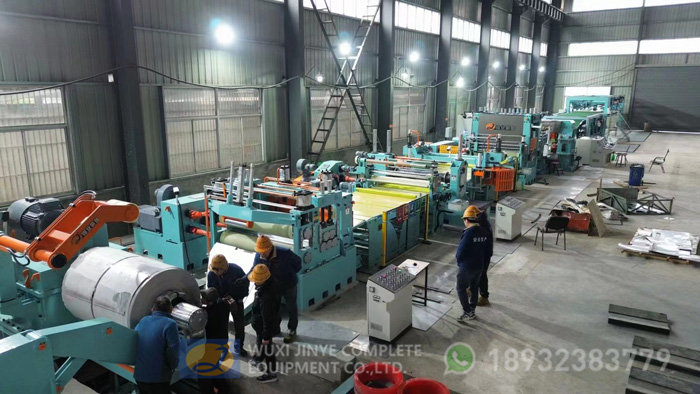
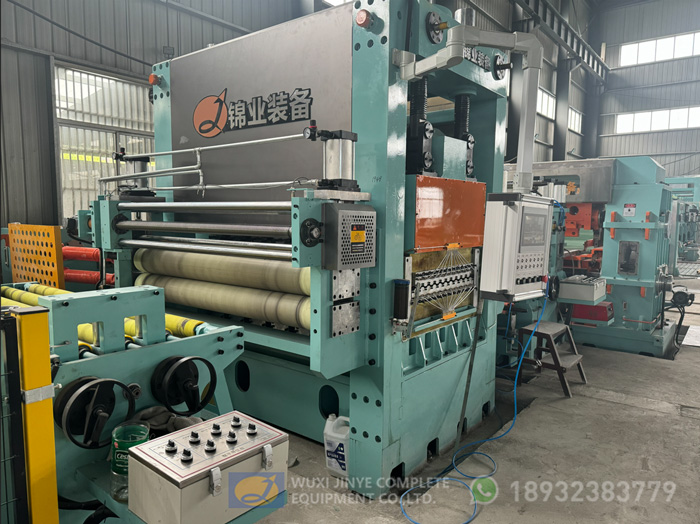
In modern industrial systems, stainless steel, due to its corrosion resistance, high strength, and ease of processing, has become an indispensable basic material in fields such as construction, home appliances, and automobiles. The key step in processing stainless steel coils into flat sheets is completed by stainless steel cut to length plants. These plants use precision equipment and processes to transform raw coils into standard-compliant flat sheets, supporting the stable operation of the downstream industrial chain. This article will take you inside one of these plants, revealing their production processes and technological secrets.
I. The Core Role of the Stainless Steel Cut to Length Machine: Overcoming the “Inherent Defects” of Coil Materials
During the production of stainless steel coils, internal stress is generated due to the rolling process, leading to problems such as wavy lines and warping when the sheet is naturally unrolled. Directly using such coils not only affects processing accuracy but may also reduce product lifespan. The core task of the stainless steel cut to lenght line is to eliminate internal stress through mechanical means, ensuring the sheet meets industry standards of flatness ≤1mm/m and straightness ≤2mm/m. This process is similar to “massaging the metal,” repeatedly stretching and leveling to restore the sheet to a stable state.
II. Four-Step Process Unveiled: Technological Transformation from Coil to Finished Product
1. Loading and Uncoiling: The coil is hoisted to the leveling line entrance and secured to the uncoiler via a hydraulic system. The equipment unrolls the coil at a speed of 5-15 meters per minute, while tension is controlled by pinch rollers to prevent tearing or deformation.
2. Coarse and Fine Leveling: The coil passes through two sets of leveling machines sequentially. In the rough leveling stage, large-diameter rollers (usually ≥300mm in diameter) are used to eliminate large waviness; in the fine leveling stage, small-diameter rollers (≤150mm in diameter) are used for fine adjustments to control the flatness within 0.5mm/m. Some factories also use nine-roller or eleven-roller leveling machines to improve leveling accuracy by increasing the number of rollers.
3. Cutting and Slitting: After leveling, the coils are fed into a shearing machine and cut into the required lengths (usually 2-12 meters) according to customer needs. If slitting is required, the boards are divided into multiple narrow strips using a slitting machine, with the width error controlled within ±0.1mm.
4.Quality Inspection and Packaging: Finished boards undergo random inspection using equipment such as laser flatness testers and vernier calipers. After passing inspection, they are wrapped in rust-proof paper and secured to wooden pallets to prevent scratches or deformation during transportation.III. Technological Upgrade Directions: Simultaneous Advancement of Intelligent and Green Technology
III. Technology upgrade direction: simultaneous advancement of intelligentization and greening
Currently, stainless steel leveling line processing plants are facing two major technological transformations: First, the introduction of AI visual inspection systems, which use high-speed cameras to capture surface defects (such as scratches and pitting) in the sheet metal in real time, improving inspection efficiency by three times compared to manual methods; second, the promotion of energy-saving leveling machines, which adopt variable frequency motors and hydraulic buffer devices, saving up to 100,000 kilowatt-hours of electricity per unit per year. In addition, some factories have implemented cloud-based management of production data, allowing customers to track order progress in real time via an app, improving service transparency.
From building facades to appliance casings, from automotive exhaust pipes to medical devices, the flatness of stainless steel sheets directly impacts the quality of end products. As the “middle link” in the industry chain, stainless steel sheet processing plants are providing downstream industries with more stable and precise raw material support through technological iteration and process optimization.